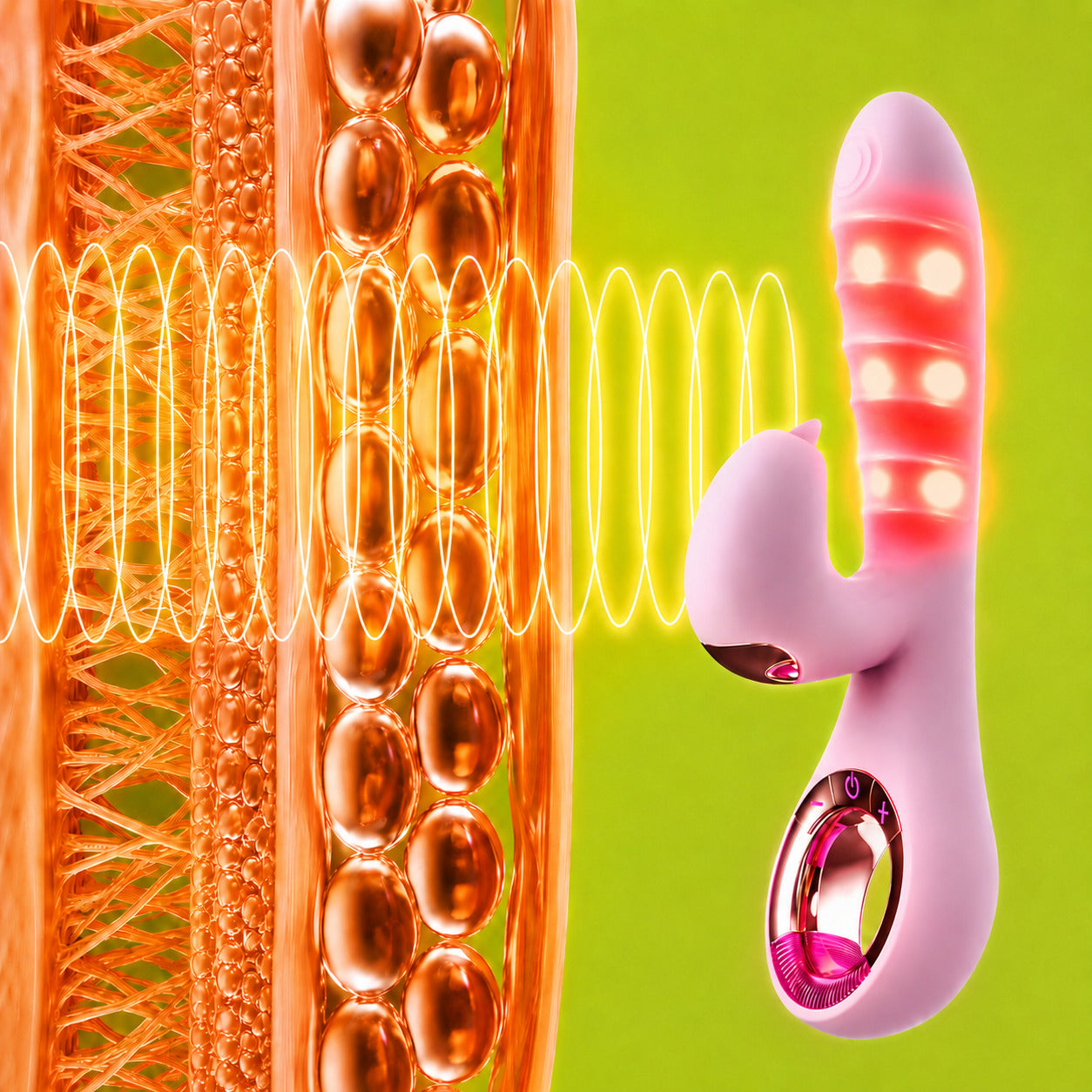
"A randomized controlled study found that red and near-infrared PBM was associated with greater improvements in local intimate-area sensitivity and comfort compared with a sham treatment. The findings suggest that PBM may influence local tissue responses and support a more comfortable, responsive intimate experience."
《Photobiomodulation Therapy for the Treatment of Vulvar Pain Among Those With Provoked Vestibulodynia: A Randomized Controlled Trial》, The Journal of Sexual Medicine, 2025, 22(4): 579–587, Flavia I. Antonio, Caroline Pukall, Linda McLean — 2025
"Research suggests that PBM may support healthy local circulation through vascular responses such as vasodilation. Healthy circulation helps deliver oxygen and nutrients to intimate tissues, providing a potential pathway for supporting normal tissue function and responsiveness."
《The Rationale for Photobiomodulation Therapy of Vaginal Tissue for Treatment of Genitourinary Syndrome of Menopause: An Analysis of Its Mechanism of Action, and Current Clinical Outcomes》, Photobiomodulation, Photomedicine, and Laser Surgery, 2019, 37(7): 395–407, Raymond J. Lanzafame, Sarah de la Torre, Gustavo H. Leibaschoff — 2019
"A randomized clinical study involving women with pelvic-floor-related discomfort investigated 808 nm near-infrared PBM together with stretching. Following treatment, participants experienced improvements in discomfort during intimate activity and measures related to sexual well-being."
《Effect of Vaginal Stretching and Photobiomodulation Therapy on Sexual Function in Women With Pelvic Floor Myofascial Pain: A Randomized Clinical Trial》, The Journal of Sexual Medicine, 2022, 19(1): 98–105, Claudia Pignatti Frederice et al. — 2022
"A prospective clinical study found that 660 nm red-light PBM was associated with improvements in intimate tissue health and overall sexual well-being in postmenopausal women. The study also reported improvements in several urinary and quality-of-life measures."
《Evaluation of Photobiomodulation Therapy for Genitourinary Syndrome of Menopause: A Single-Center Prospective Study》, PLOS ONE, 2026, Pei-Chi Wu, Ho-Hsiung Lin, Chi-Hau Chen, Yih-Shing Kuo — 2026